

The Paper Trail of Korea's u-City Era
The Paper Trail of Korea's u-City Era
Annotated Translation · Korean Source Material
Around 2010, the district of 마포구 (Mapo-gu) in Seoul served as a pilot site for Korea's national u-City program. A design paper by 박석훈 (Park Seok-hoon) of Design DADA Associates documented the public facilities built for it. The paper was published in Korean, with a rough English abstract, and has never been translated. Three excerpts below, with my translations and notes, and some thoughts on why this archive matters again in 2026.
1. The market that was supposed to exist
원문 · Korean source (Section 2-3)
Translation
Translator's note: USN stands for Ubiquitous Sensor Network, 유비쿼터스 센서 네트워크. The term runs through Korean government and ETRI documentation of this period and has no settled English rendering outside specialist literature. Machine translation frequently flattens it to a generic "sensor network," erasing the program lineage that matters for prior art purposes.
2. How the facilities got their names
원문 · Korean source (Section 3-4)
Translation
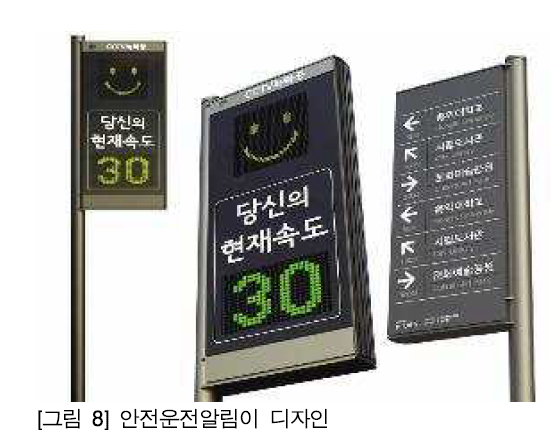
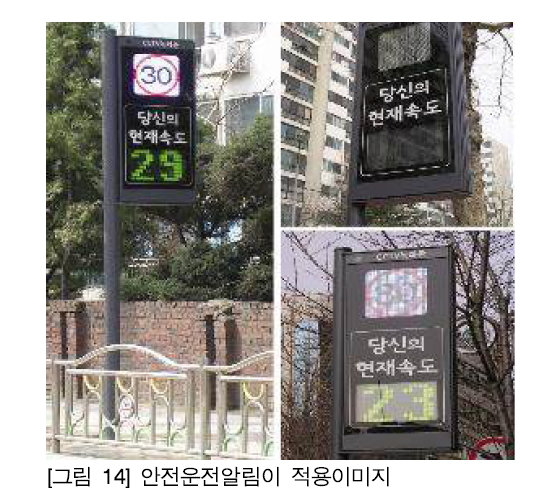
Translator's note: 안전운전알림이 has no official English name. The 알림이 suffix, roughly "the one who notifies," is a friendly agentive form common in Korean public-sector product naming and resists direct translation. "Speed feedback sign" is the closest functional equivalent in North American traffic engineering, but it discards the deliberate warmth of the Korean. When a term like this appears in a technical document under litigation, the translator's choice is not cosmetic. It determines whether a US reviewing attorney recognizes the device at all.
3. Where the u- came from
원문 · Korean source (footnotes 1 and 2)
무라카미 데루야스(村上輝康, 2000): 유비쿼터스 네트워크는 P2P(사람과 사람), P2O(사람과 사물), O2O(사물과 사물) 단계로 진화하며, O2O 단계에서 비로소 유비쿼터스 컴퓨팅 시대가 본격화 될 것으로 예측하였다.
Translation
Murakami Teruyasu (2000): Predicted that ubiquitous networks would evolve through the stages of P2P (person to person), P2O (person to object), and O2O (object to object), and that the era of ubiquitous computing would begin in earnest only at the O2O stage.
Commentary
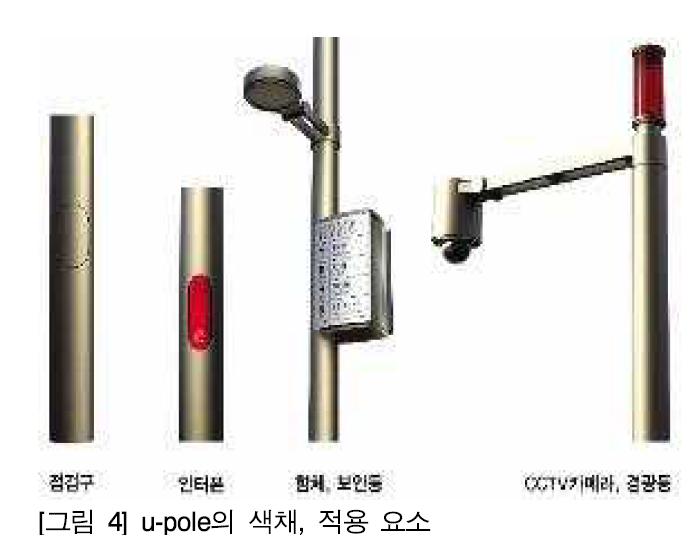
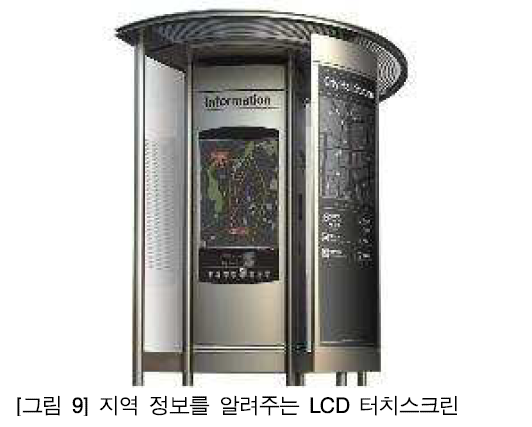
Somewhere in a Mapo-gu apartment complex there is, or was, a brushed steel pole carrying a CCTV camera, an LED security light, an emergency intercom, and a wayfinding sign, all bolted to a single column. Down the street, an LED panel told drivers 당신의 현재속도, your current speed, with a smiley face if they behaved. Both were installed around 2010 under Korea's u-City pilot program, and the design paper documenting them sat in a government archive until I pulled it out this month.
The projections are what stop me. A government evaluation institute expected the domestic u-City market to reach 146 trillion won by 2020. The overseas market was supposed to hit 286 billion dollars by 2012. Neither happened, at least not under that name. The u- prefix quietly retired sometime in the mid-2010s and the vocabulary moved on to "smart city," which is why almost nobody translates these documents anymore.
The engineering did not retire with the vocabulary. The same paper notes, almost in passing, that RFID/USN sensors, IPv6, and network research had been running for years at that point and that some of it was already commercialized. Most of that research lived at ETRI and its sister institutions, funded under the same policy framework that produced the u-City pilots. And some of those ETRI patents are now in Texas courtrooms. KAIFI LLC, a plaintiff backed by a Korean entity, has been asserting former ETRI patents against Amazon and Apple, covering sensor networks, location recognition, and related technology. The Apple case has a claim construction hearing scheduled for this summer and a trial date in 2027.
Here is what that means in practice. The prior art and technical background for those patents does not live in English. It lives in documents like this one: ministry basic plans, 사업단 reports, municipal design manuals, journal articles with rough machine-assisted abstracts stapled on top. This paper's own English abstract opens with "The purpose of this study is focuses on," which tells you roughly how much weight the English versions of this era's documents can bear. A litigation team that reads only the abstracts is reading a rumor of the record, not the record.
I have translated a fair amount of material from this technology family over the years, and I guess more than anything the u-City archive reminds me that documents outlive their markets. The 146 trillion won never arrived. The paper trail did.
If you are working a matter that touches Korean sensor network or ubiquitous computing patents, the record is deeper than the English layer suggests. I read the whole stack.
Sources
박석훈. 유비쿼터스 기술이 적용된 공공시설물 디자인개발: 마포구 u-City 시범도시 조성사업을 중심으로. [Korean-language journal article]
정보통신부 (2004). u-City 구축 활성화 기본계획. Korean-language; no English translation published.
건설교통부 (2006). U-Eco City 사업단 사전기획, 건설교통기술연구개발사업 보고서. Korean-language; no English translation published.
KAIFI LLC v. Apple Inc., No. 1:25-cv-01372 (W.D. Tex. filed Aug. 27, 2025). Public docket.